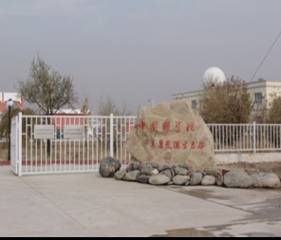
Fukang Desert Ecological Station is located in Fukang City, Changji Hui Autonomous Prefecture, Xinjiang Uygur Autonomous Region, and the 222nd Regiment directly under the Xinjiang Production and Construction Corps (also known as Fubei Farm). The geographical coordinates are 44.29103 north latitude and 87.93047 east longitude. The station headquarters is 86 kilometers away from Urumqi. The headquarters of Fukang Station covers a total area of 800 acres, including 315 acres with land use certificates, and the rest is long-term rented land. The area where the station is located has a temperate desert climate, with hot summers and cold winters. The average annual temperature is 6.6 , the highest temperature is 6, the lowest temperature is-41.6, and the average temperature in July is 25.6 ; the average temperature in January is-17, the annual precipitation is 164 mm, the annual evaporation is about 2000 mm, the snow in winter is 29 cm, and the frost-free period is 174 days. The study area has both ancient oases and new oases, as well as well-protected natural vegetation. A total of 369 species of plants from 57 families and 150 species of vertebrates have been recorded, including 94 species of birds and 37 species of mammals, of which 25 species are national-level protected animals, such as the precious black crane, snow leopard, northern goat and small bustard. The range of routine monitoring and research at Fukang Station is 87 45 '-88 05' east longitude and 43 45 '-44 30' north latitude. The area where Fukang Station is located basically has all the ecological types of arid areas. Fukang Station is 72 kilometers away from the highest peak of the East Tianshan Mountains-Bogda Peak (5445 meters above sea level), and from the southern edge of the Gurbantongut Desert (460 meters above sea level) The straight-line distance is 8 kilometers. From the glaciers of the Bogda Mountains to the Gurbantonte Desert, a complete vertical and horizontal geographical belt is formed, including ice and snow belts, meadow grassland belts, forest belts, desert-grassland belts, Gobi belts, oases and deserts. Among the oases, there are both ancient oases with a history of irrigation and farming for more than 2000 years, and newly reclaimed oases that have been extensively developed since the founding of the People's Republic of China. Moreover, the above-mentioned complete and systematic ecological series, reflected in a straight-line distance of less than 100 kilometers, is extremely rare in the world. In addition, the Sangong River Basin where Fukang Station is located is an independent and complete small watershed, creating very convenient and ideal conditions for systematic monitoring of desert-oasis ecosystems in the basin. Fukang Station and its research scope are typical of desert-oasis ecosystems in the world and China. They are a natural laboratory for studying ecological and environmental issues in arid areas.
| # | Category | Dataset title | Publish time | visits | Orders Count |
|---|---|---|---|---|---|
| 1 | Meteorology | Relative humidity data set from Fukang National Field Scientific Observation and Research Station of Desert Ecology (2013) | 2024/09/20 | 1147 | 0 |
| 2 | Meteorology | Precipitation Data Set from Fukang National Field Scientific Observation and Research Station of Desert Ecology (2013) | 2024/09/20 | 1466 | 1 |
| 3 | Meteorology | Temperature dataset from Fukang National Field Scientific Observation and Research Station of Desert Ecology (2013) | 2024/09/20 | 699 | 0 |